Bio
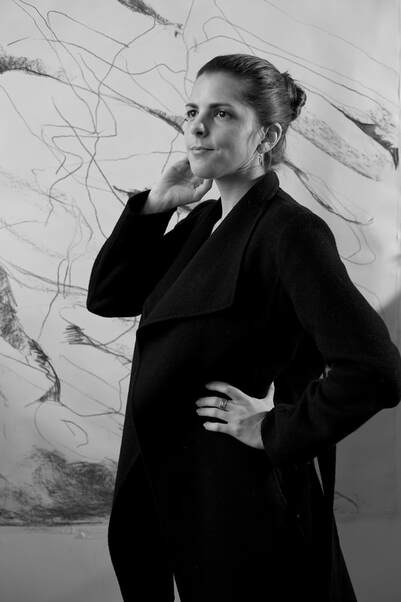
Olivia Tripp Morrow (b.1990, Washington, DC) is a multidisciplinary artist and educator based in the DC-Metro area. Her artistic practice is experimental and process-driven, often incorporating found or donated objects with intrinsic personal or cultural significance as materials. Morrow’s work broadly addressing themes of the body, memory, vulnerability, healing, caregiving, and grief through drawing and painting, sculpture, embroidery, and fiber-based installations.
Morrow has exhibited her work in group exhibitions nationally and internationally. She has had solo exhibitions at the Museum of Contemporary Art Arlington (VA), VisArts (MD), IA&A Hillyer (DC), Anacostia Arts Center (DC), and Point of Contact Gallery (NY). Her work has been reviewed in The Washington Post, Bmore Art, East City Art, Washington City Paper, Washingtonian, MSNBC, and others. She has participated in Artist Residency programs at the Museum of Contemporary Art Arlington (2017-2025), VisArts (2020), and Anacostia Arts Center (2016). Morrow received a BFA in Sculpture from Syracuse University in 2012. She currently lives and works in northern Virginia.
About my recent work
My work has always been about the body. I’ve lived with chronic pain related to severe scoliosis for most of my life. Updated X-rays in 2019 revealed that my spine's curvature had nearly doubled, my ribs were sinking into my hips, and the protruding ‘hump’ on my upper back could be explained by the twisting rotation of my vertebra and rib cage. Surgery was the only way to halt the progression of my condition, which would otherwise eventually impair my heart and lung function.
Recovering from the 13-level spinal fusion surgery brought the focus of my practice from the outer body (cultural norms and expectations of beauty, gender, sexuality) to the inner body (anatomy, pain, proprioception, vulnerability, and healing). This investigation of the body as both a physical structure and emotional archive was the focus of my solo exhibition Body, Joy, Cage, Scar (2021) at MoCA Arlington. While creating work for this show, I was interested in connecting with viewers through my own vulnerability and in exploring the ways my materials’ physical properties mirrored my own physical and emotional states. The exhibition spanned multiple mediums, including drawing, painting, ceramic sculpture, video/performance, and embroidery—a new skill my mother taught me during my recovery.
My mother, an accomplished art therapist, was my primary caretaker through the early months after surgery. The pain was baffling, and I quickly learned to be vulnerable in ways I couldn’t have anticipated. Witnessing and experiencing my mother’s tenderness and her own vulnerability while caring for me was profound. I learned so much from her, including how to embroider, with this new medium functioning as both material and metaphor for care, mending, and connection. I had no way of knowing that only three years later our roles would be reversed as I cared for her. Her Stage IV lung cancer was diagnosed in 2023, and she died unexpectedly just before Christmas, only six months later.
My mother’s death marked another turning point in my work. My solo exhibition at MoCA Arlington in 2025, titled (Un)Tethered, incorporated textiles, painting, drawing, sculpture, and installations that evoked the vulnerability and care that my mother and I exchanged through those challenging years of my recovery from surgery and her devastating illness and death. Embroidery remained a crucial throughline: like the thread itself, embroidery felt like a way of slowly mending the incredible loss I felt, and it connected me to her. The works were brightly colored, with a soft, airy quality that conjured a quiet peacefulness. These formal decisions intentionally contrasted the weight and darkness normally associated with grief and mourning.
The highly personal and narrative qualities of my recent works offer multiple points of entry for viewers to connect via their own experiences. By foregrounding vulnerability and caregiving, my work subverts dominant cultural narratives that marginalize disabled bodies and caregivers.
Recovering from the 13-level spinal fusion surgery brought the focus of my practice from the outer body (cultural norms and expectations of beauty, gender, sexuality) to the inner body (anatomy, pain, proprioception, vulnerability, and healing). This investigation of the body as both a physical structure and emotional archive was the focus of my solo exhibition Body, Joy, Cage, Scar (2021) at MoCA Arlington. While creating work for this show, I was interested in connecting with viewers through my own vulnerability and in exploring the ways my materials’ physical properties mirrored my own physical and emotional states. The exhibition spanned multiple mediums, including drawing, painting, ceramic sculpture, video/performance, and embroidery—a new skill my mother taught me during my recovery.
My mother, an accomplished art therapist, was my primary caretaker through the early months after surgery. The pain was baffling, and I quickly learned to be vulnerable in ways I couldn’t have anticipated. Witnessing and experiencing my mother’s tenderness and her own vulnerability while caring for me was profound. I learned so much from her, including how to embroider, with this new medium functioning as both material and metaphor for care, mending, and connection. I had no way of knowing that only three years later our roles would be reversed as I cared for her. Her Stage IV lung cancer was diagnosed in 2023, and she died unexpectedly just before Christmas, only six months later.
My mother’s death marked another turning point in my work. My solo exhibition at MoCA Arlington in 2025, titled (Un)Tethered, incorporated textiles, painting, drawing, sculpture, and installations that evoked the vulnerability and care that my mother and I exchanged through those challenging years of my recovery from surgery and her devastating illness and death. Embroidery remained a crucial throughline: like the thread itself, embroidery felt like a way of slowly mending the incredible loss I felt, and it connected me to her. The works were brightly colored, with a soft, airy quality that conjured a quiet peacefulness. These formal decisions intentionally contrasted the weight and darkness normally associated with grief and mourning.
The highly personal and narrative qualities of my recent works offer multiple points of entry for viewers to connect via their own experiences. By foregrounding vulnerability and caregiving, my work subverts dominant cultural narratives that marginalize disabled bodies and caregivers.